

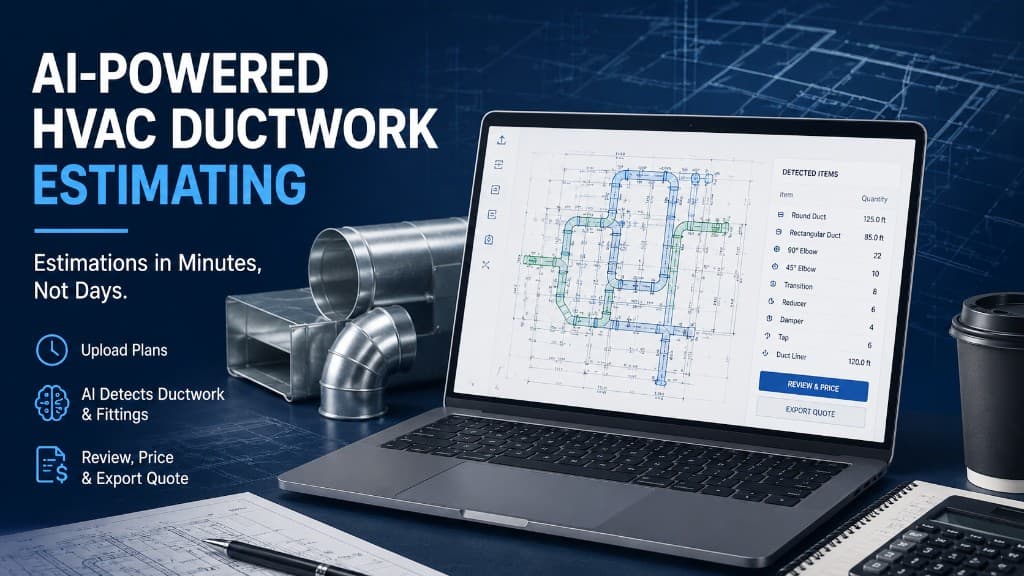
For many HVAC and sheet metal contractors, estimating is where the pressure starts. A new set of PDF drawings lands in the inbox, the bid deadline is tight, material prices need checking, and every elbow, transition, damper, liner, reducer, tap, and duct run has to be counted correctly.
That is where AI-powered HVAC ductwork estimating is starting to make a practical difference. Not by replacing experienced estimators, but by helping them move through the slowest parts of takeoff and quote preparation with more speed, structure, and consistency.
When used properly, AI can help contractors review ductwork plans, detect items, build material lists, apply pricing, and prepare professional quotes faster than traditional manual workflows.
Why HVAC Ductwork Estimating Takes So Much Time
Ductwork estimating is not just counting parts.
A good estimate depends on reading mechanical drawings carefully, understanding duct sizes, identifying fittings, checking notes, reviewing plan revisions, and translating everything into a quote that protects margin while staying competitive.
Most estimating teams deal with the same daily challenges: crowded PDF plans, multiple drawing sheets, similar-looking fittings, missed items, changing pricing, and last-minute quote requests.
Even experienced estimators can lose time jumping between drawings, spreadsheets, supplier pricing, and quote templates. The work requires judgment, but much of the process is repetitive.
That repetitive work is where AI can help.
What AI-Powered HVAC Ductwork Estimating Actually Means
AI-powered estimating does not mean uploading a plan and blindly accepting a finished bid.
In a practical contractor workflow, AI acts more like an estimating assistant. It helps identify ductwork components from PDF drawings and organizes them into a structured takeoff that an estimator can review.
For ductwork contractors, that can include round ducts, rectangular ducts, elbows, transitions, reducers, dampers, taps, liners, and other fittings shown on the plans.
The estimator still checks the output, makes corrections, applies business-specific pricing, and decides what belongs in the final quote.
That distinction matters. AI can speed up detection and organization. Human review protects accuracy, scope understanding, and judgment.
Manual Takeoff vs. AI-Powered Takeoff
Manual ductwork takeoff usually follows a familiar process.
An estimator opens the drawings, reviews each sheet, marks up duct runs and fittings, counts quantities, enters items into a spreadsheet, checks pricing, and prepares the quote. If the scope changes or a revision comes in, part of that process may need to happen again.
The problem is not that manual estimating is wrong. Many contractors have built strong businesses with manual workflows.
The problem is that manual estimating becomes harder to scale.
When bid volume increases, deadlines compress, or senior estimators are overloaded, the business can run into bottlenecks. Jobs may be quoted late. Some opportunities may be skipped. Estimators may rush through plans, increasing the risk of missed items.
AI-powered takeoff changes the starting point.
Instead of beginning with a blank spreadsheet, the estimator starts with a detected and organized list of ductwork items. The work shifts from manual counting to review, correction, pricing, and quote preparation.
Where AI Helps Most
AI helps most with the parts of estimating that are repetitive and time-consuming.
It can scan PDF ductwork drawings, identify visible components, organize quantities, and create a cleaner starting point for review. This is useful when estimators are working under pressure and need to move quickly without losing track of small items.
Missed fittings are a common issue in ductwork estimating. An elbow missed here, a transition missed there, or a damper not carried into the quote can affect material cost and margin. AI-assisted detection can help flag these items during the first pass.
AI can also help create material lists more quickly. Once ductwork items are detected, they can be organized into a structure that is easier to price and review.
Where Human Review Still Matters
AI can help with speed and structure, but HVAC estimating still requires professional judgment.
Human review is especially important when drawings are incomplete, ductwork is crowded, notes affect material requirements, revisions change the scope, or labor assumptions depend on project conditions.
An experienced estimator understands things a model cannot fully know from a drawing alone.
For example, a plan may show a duct run clearly, but the estimator still needs to consider access, installation conditions, project phasing, specification notes, and how the contractor actually fabricates and installs the system.
The best use of AI is not to remove that expertise. It is to give that expertise more room to work.
How Sheetmetal AI Supports Faster Ductwork Quotes
Sheetmetal AI is built specifically for HVAC ductwork and sheet metal estimating workflows.
Contractors can upload ductwork plans, let the AI detect ductwork items and fittings, review and correct the takeoff, apply custom pricing, and export professional quotation PDFs.
That workflow is designed around how contractors actually work: start with PDF ductwork drawings, detect components automatically, review quantities, apply contractor-specific pricing, and prepare a quote that is ready to send.
For busy estimating teams, this can reduce the time spent on manual counting and help them focus on checking scope, protecting margin, and preparing a competitive bid.
Conclusion
AI-powered HVAC ductwork estimating gives contractors a practical way to reduce manual takeoff time, organize material lists faster, and prepare quotes with more consistency.
It does not replace the estimator's judgment. It does not remove the need to review drawings, check quantities, or apply real-world pricing knowledge.
But it can help estimators get out of the slowest part of the process: manually counting ductwork items from PDF plans and rebuilding the same quote structure again and again.
If your team is still spending too much time counting fittings manually, it may be time to see how Sheetmetal AI can support your next ductwork estimate.
FAQ
What is AI-powered HVAC ductwork estimating?
It is the use of AI to analyze ductwork drawings, detect visible components and fittings, organize material lists, and support faster quote preparation.
Can AI replace an HVAC estimator?
No. AI should support experienced estimators, not replace them. Human review is still needed for scope, pricing, exclusions, and bid strategy.
What items can AI help detect?
AI can help identify round ducts, rectangular ducts, elbows, reducers, transitions, dampers, taps, liners, and fittings depending on drawing quality.
Why is manual ductwork takeoff slow?
It requires reviewing PDF drawings, counting items, checking notes, updating pricing, and preparing quote documents manually.
How does Sheetmetal AI help contractors?
Sheetmetal AI helps contractors upload ductwork plans, detect ductwork items, create material lists, apply pricing, review results, and export professional quotes.
Try Sheetmetal AI for your next ductwork estimate.
Turn PDF ductwork plans into quote-ready material lists.
Stop counting manually. Start quoting faster.