
Estimating Resources · SheetMetalAI Guide
HVAC Takeoff vs. Estimating: What Happens at Each Stage?
Takeoff, estimate, and quote are often used together, but they describe different parts of bidding work. Knowing where one ends and the next begins helps you choose software and review its output. For a ductwork project, start with what the drawing requires, then determine how your business will price that work.
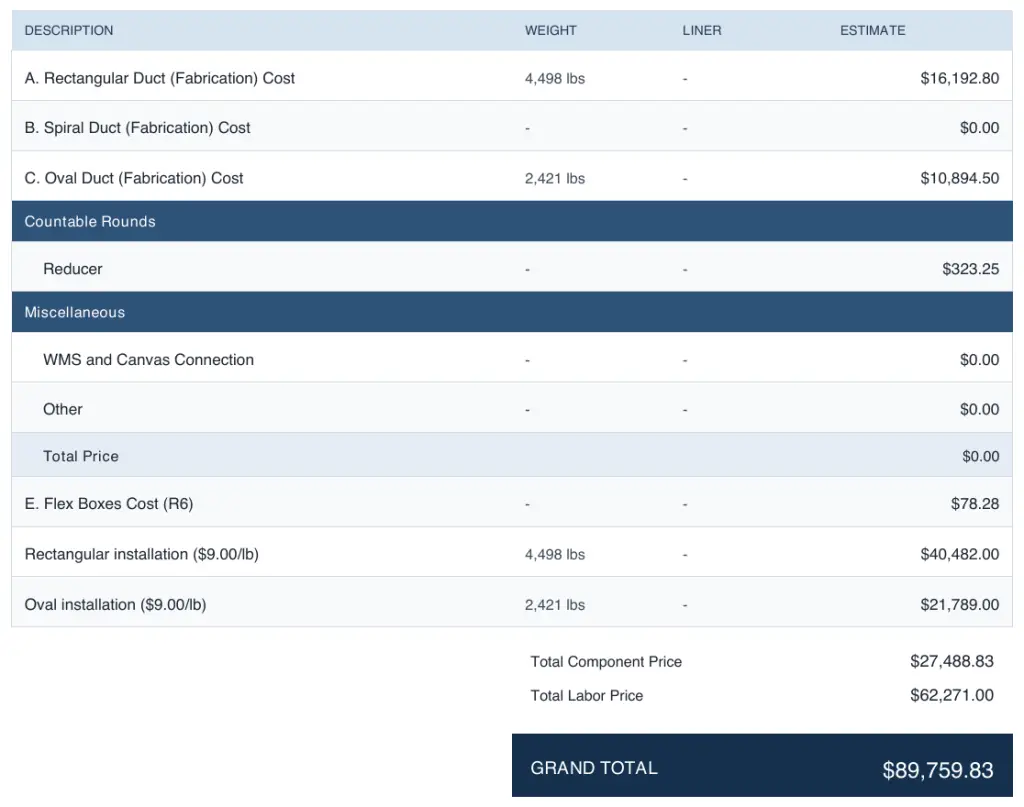
Actual software example from the M-501.00 demo project. Review the plan, scope, quantities, and rates before using an estimate.
The Takeoff: What Is Shown and How Much?
A takeoff identifies and measures the components included in your scope. For ductwork, that can involve runs, fittings, sizes, lengths, and material quantities derived from the mechanical plan and specifications.
The takeoff needs a clear basis: drawing revision, scope, dimensions, and material requirements. If those are uncertain, applying prices will not resolve the underlying issue.
The Estimate: What Will That Scope Cost?
Estimating applies rates and assumptions to the reviewed quantities. Material pricing, labor assumptions, and project conditions affect the numbers you carry. The estimate should reflect your business and the work you intend to include.
SheetMetalAI connects reviewed ductwork quantities with custom pricing tables and shop rules. Its optional read-only connector lets you ask Claude about finished takeoffs, latest quotes, and uploaded documents. Check the source information and make any changes in SheetMetalAI. Explore the Claude connector.
The Quote: What Are You Offering the Customer?
A customer quote communicates the proposed price and scope. Your normal bid process may also need inclusions, exclusions, clarifications, terms, or supporting documents beyond the priced takeoff.
The demonstrated SheetMetalAI export is a priced PDF. Review that file and the rest of your bid package before sharing it. A preliminary demonstration estimate is not a ready-made customer proposal.
Choose Tools Around Your Starting Point
If your work begins with mechanical PDF drawings, inspect the plan-reading, review, quantity, and pricing workflow. If you need dispatching, service invoicing, or equipment sizing, those are different requirements to confirm separately.
Ask to see a real project from beginning to end. Check whether you can inspect the takeoff and whether the output matches what your business needs to review.
Use a Familiar Project to Connect the Stages
Take one completed job through upload, ductwork review, pricing, and PDF export. Compare the same scope at each stage and note where you need adjustments.
This gives you a practical software evaluation: what you can see, what you can change, and what still needs your own estimating judgment.
Keep This Checklist With Your Estimate.
✓ Takeoff: reviewed components and quantities
✓ Estimate: quantities with rates and assumptions
✓ Quote: reviewed price and communicated scope
✓ Software evaluation: inspect every handoff
Put the Next Step in Context.
How to Create a Ductwork Takeoff From a PDF Plan →Explore HVAC contractor estimating or sheet metal shop estimating for the workflow that fits your business.
See Your Next Quote Take Shape.
Watch the real-project demo, then evaluate the full workflow with a mechanical PDF you know.