
Estimating Resources · SheetMetalAI Guide
Manual vs. AI-Assisted Ductwork Takeoffs: What Changes?
AI-assisted takeoff changes how the first pass is produced. It does not remove the need to understand the drawing, confirm scope, and check quantities. The most useful comparison is a complete reviewed workflow on the same project—not a stopwatch on the first result.
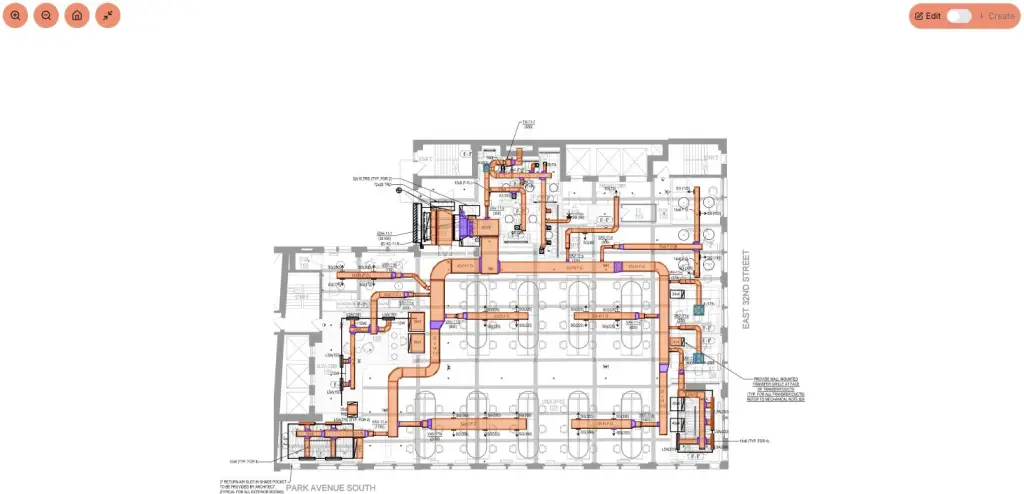
Actual software example from the M-501.00 demo project. Review the plan, scope, quantities, and rates before using an estimate.
How the First Pass Is Created
In a manual process, the estimator identifies and measures the ductwork using the chosen drawing and takeoff tools. The work is directly guided by the person interpreting the plan.
SheetMetalAI’s Duct Monster produces the drawing-based takeoff. The separate, read-only Claude connector lets you ask about finished takeoff items, quote totals, project status, and uploaded documents. You review and compare the information, then make any changes in SheetMetalAI.
What the Estimator Still Checks
Both approaches need a correct drawing revision, defined scope, readable dimensions, and attention to specifications. Crowded or ambiguous areas deserve closer review regardless of how the first pass was created.
Compare detected geometry with the source drawing. If you ask Claude about your documents, verify its answers against the referenced pages. Confirm scope, exceptions, and requirements before applying pricing. See what the Claude connector can read.
Where Pricing Fits
A quantity is not a complete price. Material rates, labor assumptions, and shop rules still need to match the job. Carrying the wrong rate into either workflow can undermine an otherwise carefully reviewed takeoff.
SheetMetalAI connects the reviewed takeoff with custom pricing tables and a priced PDF export. Check that handoff as part of your evaluation.
How to Compare the Two Fairly
Choose a completed job with a readable mechanical PDF and a known scope. Use the same sheets and revision in both approaches. Compare quantities by component or material, and investigate differences instead of assuming either output is correct.
Record the time spent setting up, inspecting, correcting, pricing, and reviewing the export. Include the learning needed for the new tool when deciding how it fits your work.
What a Useful Trial Should Tell You
Look for clear answers: Can you inspect the detected work? Can you refine the results? Do the material units and pricing controls fit your process? Does the exported PDF give you what you need for review?
Choose based on the complete workflow and your own results. Neither an AI label nor a fast initial result is evidence that a quote is ready to send.
Keep This Checklist With Your Estimate.
✓ Use the same drawing and scope
✓ Compare reviewed quantities, not just first results
✓ Include corrections and pricing checks in timing
✓ Evaluate the actual PDF output
✓ Confirm the fit for your shop before subscribing
Put the Next Step in Context.
HVAC Takeoff vs. Estimating: What Happens at Each Stage? →Explore HVAC contractor estimating or sheet metal shop estimating for the workflow that fits your business.
See Your Next Quote Take Shape.
Watch the real-project demo, then evaluate the full workflow with a mechanical PDF you know.